
“However, take care and be earnestly on your guard not to forget the things which your own eyes have seen, nor let them slip from your memory as long as you live, but teach them to your children, and to your children’s children.” — Deuteronomy 4:9
When I was a child, I suffered many ailments. Colds, which preceded bouts of pneumonia, leading to numerous hospitalizations. I endured multiple sinus, ear and bronchial infections and a most annoying chronic runny nose. In addition, I was afflicted with joint pain, some days worse than others. At times, I could not easily walk. My mother applied ointments and heat to soothe the pain, while my brother and sisters were assigned to entertaining me with board games and decks of cards.
I was under weight and frail. I offered doctors a challenge as I was tested and prodded during hospital stays and endless doctor visits. I missed a good deal of school, but I managed to keep up with the help of my siblings and many caring teachers.
Summers were especially difficult for me. The closed-in back porch of my childhood home was set up as a bedroom. From there I could rest as I watched my brother and sisters play in the backyard. I yearned to join in as they each took their turn jumping off the swimming pool ladder into the deep cool water. When my dad wasn’t at work, he held tight to the wobbly ladder guiding each of his children as they dove in. I longed to feel the droplets that splashed high into the air as my siblings submerged into such refreshment. On those sultry summer days, all I could do was watch while hoping for a cool breeze through the large screens of the porch windows. Most of all, I longed to play and have fun.
For a child recovering from an ear infection or pneumonia, swimming was not a good idea. I had to find other entertainment. This is why my mother and my aunts spent time teaching me how to cook and sew. I especially enjoyed all types of stitching and handwork. I was only about eight years old when I stitched together a fabric doll and subsequently created her wardrobe. I watched intently when I saw someone knitting or crocheting, and, at times, some of those ladies were patient enough to show me the steps to get started. Often, I did some handwork while on that back porch.
It was one of those days on the porch when my father came in and handed me a big, tarnished tin container. It was an old “Hostess Fruit Cake” tin, those words etched along the side. Even back then it was already worn and faded. The decorative etching had seen better days. When I opened it up, I discovered threads, needles, thimbles, and some other little treasures now long ago used or lost.

“It belonged to your grandmother,” my father said.
“Mémé?” I asked.
“Yes,” he said, “but not the one you know. This was my mother’s sewing tin.”
My father’s parents died young, not long after the end of World War II. At age 21, he became the head of his family’s household. It was years into my own adulthood before I came to understand the many challenges of his life.
The Mémé and Pépé I knew, my mother’s parents, lived a good distance away. Our family visited them only once a year, and so, although they were alive, I did not experience their influence all that much either. My father’s mother, Eva, loved sewing and other handwork. She made clothes for her children and gifts for their Christmas stockings. She mended and altered, perhaps even to collect extra income during those difficult early 20th century days. Maybe when my dad watched me on the porch, my stitching reminded him of his mom.
I think I was about twelve when my father gifted me the tin. I remember feeling special because as one of six children, it was a rare occasion to receive a gift if it wasn’t your birthday or Christmas. However, I never could have imagined how that gift would impact my life, even now, some 53 years later.
In January 1970, when I was 13, my health mystery was solved. I was diagnosed with Primary Immunodeficiency. Although there was no cure, there was a treatment and once those treatments began, I was finally able to live something of a normal life. By the fall of that year, I started high school, developed new friendships, and was actually keeping up with schoolwork on my own. Sadly, what was beginning to feel like normalcy, suddenly became a nightmare when my dad unexpectedly died of heart failure. He was only 45 years old. We were unprepared for such a trauma, and we struggled to find secure footing under this new family life without a husband and a father.
In all things, time heals and we adapt. My family moved on with the generous help of extended family, friends and neighbors. Life continued, and my father’s six children grew to choose their own paths. I believe we each deeply have held his influence in our hearts. For me, I have come to cherish the memories and the value of memory.
Perhaps it is because of the loss I experienced at such a young age, or maybe it’s because I longed to know my Mémé who loved to sew, that led me down the path of honoring memories. I felt the absence of a grandmother-granddaughter relationship and I was robbed of the father-daughter connection. My dad did not see me graduate high school nor was he there to walk me down the aisle. My husband and daughters never got to meet him. Worst of all, he did not live to see how I would thrive in life despite my perilous beginning. I have thought often not only about the memories I have, but about the ones that did not happen.

It was not long after my initial quilting class in 1993 (inspired, by the way, by my father’s sister, Pauline) when I began to put quilt making together with memory making. There were the quilts created from fabric swatches of my daughters’ clothes. There were baby quilts I stitched together from a grandmother’s clothing, because she had passed and this would give her grandchild a way to snuggle with her. Soon I discovered photo transfer techniques enabling me to create quilts to honor anniversaries and major events. As time went on, I became highly skilled in the applique techniques required to recreate pictures into fabric artistry. As best I could, I honored the sick and the deceased with fabric memorials, permanently testifying to the love and value of those individuals.
Many times, over the years, I was commissioned, or I was self-motivated, to create a quilt which honored a milestone wedding anniversary or birthday. It took many hours to collect photos and special memories to incorporate into a quilt. I sought out tee shirts and souvenirs. A handkerchief, rosary beads, ticket stubs, or brochures – nothing was too strange. If I could not put the actual item in the quilt, I would recreate it in applique or transfer it to photo fabric. The bigger the challenge, the more joyous the process.
In addition, I interviewed family members to get an idea of the feelings surrounding particular memories. It is amazing how significant and life changing a memory can be to one person, while at the same time, the same memory is hardly remembered by a sibling or a friend who was there, too! I did my best to capture both the memories and the value of those memories. Most of all, I sought to affirm the recipient’s life because each of us has an impact on other lives, even if you never know about it.
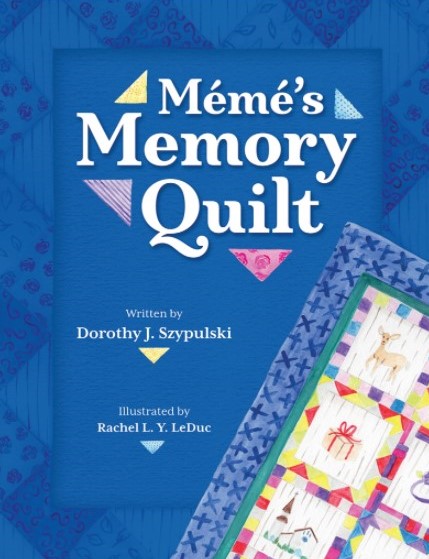
A few years ago, while making my own memory quilt of our life raising two daughters in our home in Connecticut, I began to think about the value of creating a quilt while the memories were being made. I wish my Mémé could have made memories with me while making a quilt of our life together. How wonderful would that have been? And so, the idea of “Mémé’s Memory Quilt” was conceived.
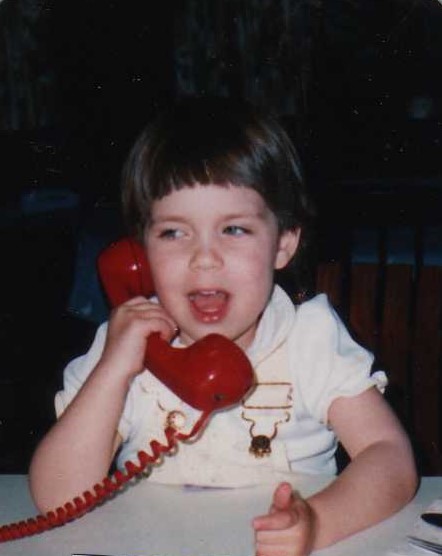
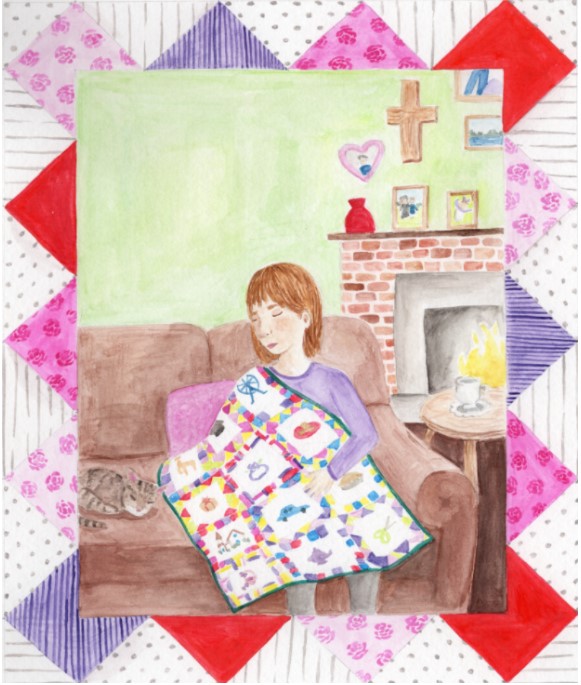
Beginning with a picture of my daughter, Laura, talking on our red kitchen phone in 1987, and ending with a picture of my daughter, Robin, snuggling a finished quilt in 2017, my story took hold. Memories from my childhood, memories raising my daughters, and memories I imagined might have happened with my Mémé, are included in this book. My experiences from all the memorial quilts I’ve created, as well as the precious encounters of the recipients of my work are also absorbed into the pages of “Mémé’s Memory Quilt.”
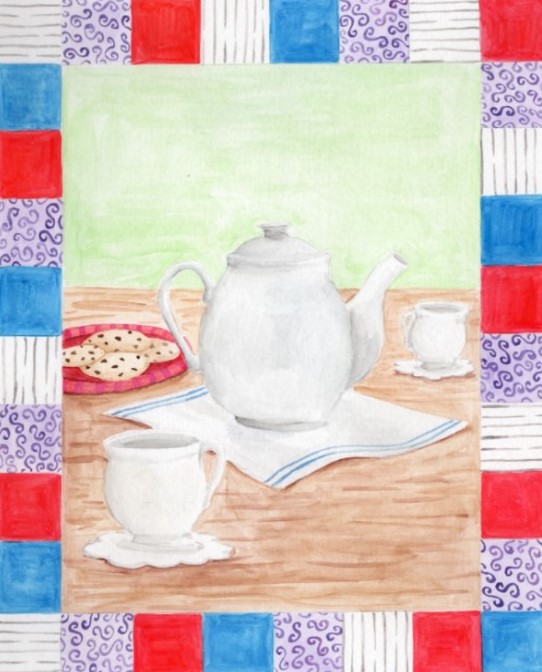
“Our memories are like a picture book in our mind that we can look at any time we would like,” Mémé said. I did not understand, but I said, “Okay!” [MMQ Pages 26-27]
A “chance” visit brought me face to face with Rachel LeDuc’s art, when upon seeing it and momentarily feeling breathless, I knew I found an artist who could bring my story to life. It has been my sincerest pleasure to work with Rachel, who somehow could see the pictures in my mind and reproduce them with her gift of artistry. She worked steadily with care and patience for the last couple of years to create these beautiful pages of art. Rachel, you are truly gifted, and I am deeply grateful.
In addition, I am very thankful for all of the talents of my daughter, Robin. She spent hours and hours working on the layout, guiding me through the process, while critiquing and editing, too. Her advice, expertise, and friendship are priceless to me. I could not have completed this book without her.
And so here it is. This book is a compilation of all that I love – Family, faith, children, tradition, creativity, imagination, memories, quilt making, and most especially, God. I envision you reading “Mémé’s Memory Quilt” to your children and grandchildren, and I imagine them remembering it. Mostly, I hope you are inspired to create your own special memories with the children in your life. One day they will understand the gift you gave them!


 Sew Write To Pray